The Swartland, Where Big Skies Meet Bold Wines

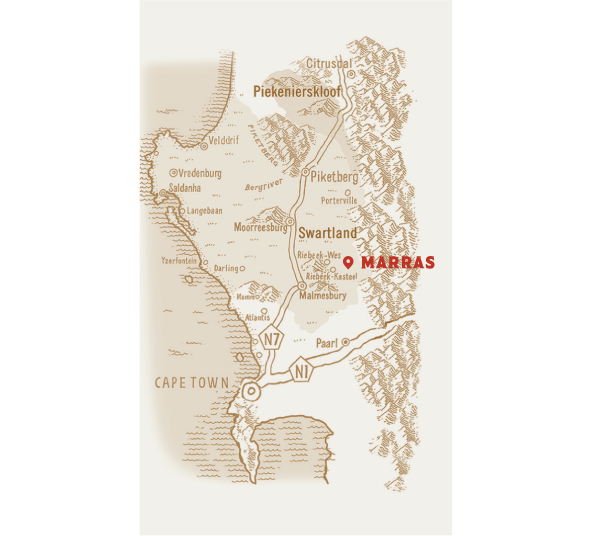
Known for its untamed beauty, diverse soils and dryland farming, the Swartland is a place where vines work hard and reward us with wines full of character. Here, the focus is on purity, texture and wines that sing of their origins. Paardeberg granite gives Chenin Blanc its tight, mineral elegance, while Kasteelberg schist yields structured, age-worthy wines with freshness and depth.

Heritage Vines Of The Cape
Working with old vineyards across the Piekenierskloof and Swartland is both a privilege and a responsibility. These heritage vines, with their small but concentrated yields, embody resilience. Like true South Africans, they adapt to whatever nature throws their way – shifting rainfall, soaring summer heat and challenging conditions.
Their reward? Grapes of incredible depth, complexity, and balance that capture the essence of time and place.
Swartland Soils
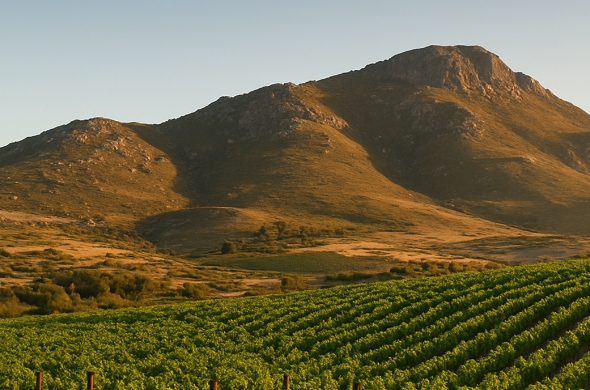
Granite slopes of the Paardeberg
The Paardeberg is defined by its decomposed granite soils – well-drained, quartz-rich, and naturally low in nutrients. These conditions encourage deep root systems and low yields, resulting in concentrated, pure fruit expression in varieties like Syrah, Grenache, and especially Chenin Blanc.
The Influence of Soil on Style: Granite lends a signature flinty minerality, bright natural acidity, and refined structure, while the mountain’s warm days and cool nights preserve freshness and detail. The wines from the Paardeberg’s granite slopes are known for their precision, vibrancy, and a distinct sense of Swartland place.
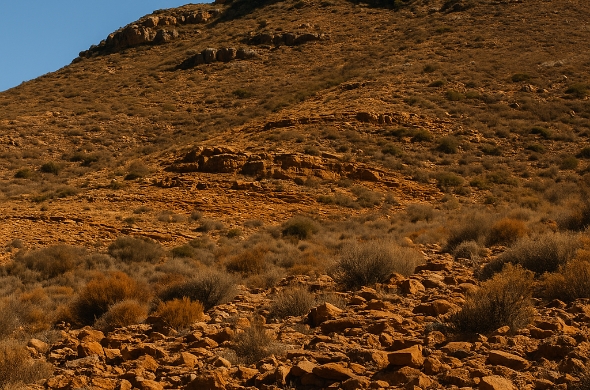
Schist soils of the Kasteelberg
The Kasteelberg’s schist soils – layered, metamorphic and rich in mica – create a dramatically different expression within the Swartland. Their rocky, nutrient-poor nature produces low yields and densely flavoured grapes, particularly Syrah, Mourvèdre and Chenin Blanc.
The Influence of Soil on Style: Schist contributes a slate-like minerality, dark fruit depth, savoury spice and a silky tannin structure, giving the wines a textured, brooding elegance. Combined with the Kasteelberg’s warm, dry climate and cooling evening breezes, the result is powerful, mineral-driven wines with unmistakable terroir identity.